The 2026 UK local elections have delivered one of the toughest political moments for Prime Minister Keir Starmer and the Labour Party, sparking growing pressure from within his own ranks and raising serious questions about the party’s future direction.
The results revealed heavy losses for Labour across England, Scotland, and Wales, signaling a dramatic shift in the UK’s political landscape and exposing deep frustrations among voters from multiple sides of the political spectrum.
Labour suffers major election losses across the UK
A significant portion of local councils in England held elections this week, while Scotland and Wales also voted for representatives in their devolved parliaments.
By the end of the count, Labour had lost 1,498 out of the 2,566 English council seats contested. The party also lost three seats in the Scottish Parliament, adding to what many political analysts are calling a historic collapse in support.
One of the most symbolic defeats came in Wales. For the first time in a century, Labour failed to maintain dominance in Welsh politics. The party lost control of the Senedd, Wales’ national parliament, finishing behind Plaid Cymru and Reform UK.
The result has intensified concerns inside Labour, with some MPs and senior party figures openly questioning Starmer’s leadership and future strategy.
Labour attacked from both the left and the right
The election results highlighted a growing challenge for Labour: losing voters to competing parties on both ends of the political spectrum.
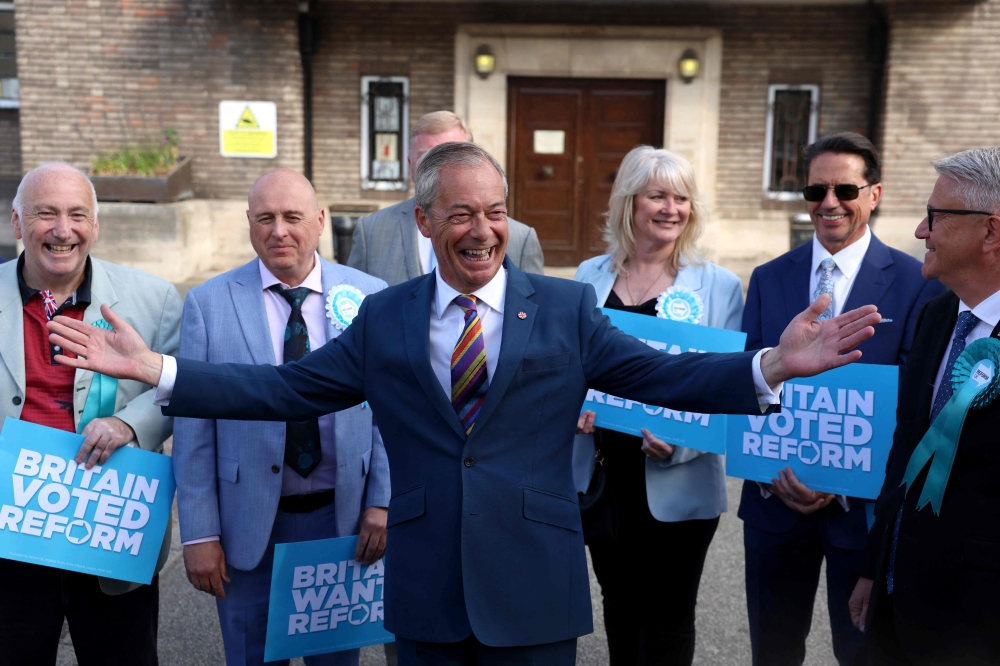
Reform UK, led by Nigel Farage, made huge gains in traditional working-class regions across northern and central England. The party secured 1,452 council seats nationwide, strengthening its position as a major political force.
Meanwhile, Labour also struggled in more affluent urban areas, where the Green Party and Liberal Democrats attracted younger and progressive voters frustrated with Labour’s policies and messaging.
This political squeeze has left Labour facing a difficult balancing act, as Starmer attempts to reconnect with voters who feel disconnected from the party’s current direction.
London results expose cracks in Labour’s voter coalition
London, long considered a Labour stronghold, became another warning sign for the party.
Labour lost control of 12 out of its 21 councils in the capital, exposing fractures within its broad coalition of working-class communities, Muslim voters, and younger educated supporters.
Independent candidates performed strongly in boroughs such as Newham, Tower Hamlets, and Redbridge, areas with large Muslim populations. Many of these campaigns focused heavily on the Gaza conflict and criticism of Labour’s stance during the war.
The Green Party also achieved significant gains in wealthier and highly educated areas, benefiting from growing dissatisfaction among progressive voters.
At the same time, Reform UK expanded its influence in outer London boroughs, including Havering, where the party won 39 of 55 seats.
UK politics becomes increasingly fragmented
The election results also underline a larger transformation happening in British politics.
For decades, Labour and the Conservative Party dominated UK elections, often capturing around 90 percent of the national vote combined. However, newer and insurgent parties are rapidly reshaping the political map.
According to projected estimates, Labour and the Conservatives together are expected to receive only 34 percent of the vote in England’s local elections — the lowest combined share recorded in modern local election history.
The rise of smaller parties, independents, and populist movements suggests British politics is entering a far more fragmented and unpredictable era.
Reform UK emerges as one of the biggest winners
Among the biggest winners of the election was Reform UK.
Nigel Farage’s party made strong gains even in areas previously considered difficult territory. In Scotland, Reform secured 17 seats in the Scottish Parliament, matching Labour’s total and marking a significant breakthrough north of the border.
The results indicate that Reform UK is no longer a fringe movement but an increasingly influential force capable of reshaping future national elections.
What happens next for Keir Starmer?
The election fallout leaves Keir Starmer facing perhaps the most critical moment of his political leadership.
While Labour remains one of the UK’s largest political parties, the scale of the losses has triggered internal frustration and public debate about whether the party can recover before the next general election.
Political analysts believe Starmer now faces growing pressure to redefine Labour’s identity, reconnect with working-class communities, and rebuild trust among progressive voters who have shifted toward smaller parties and independents.
The coming months could determine not only Starmer’s political future, but also the future direction of modern British politics.