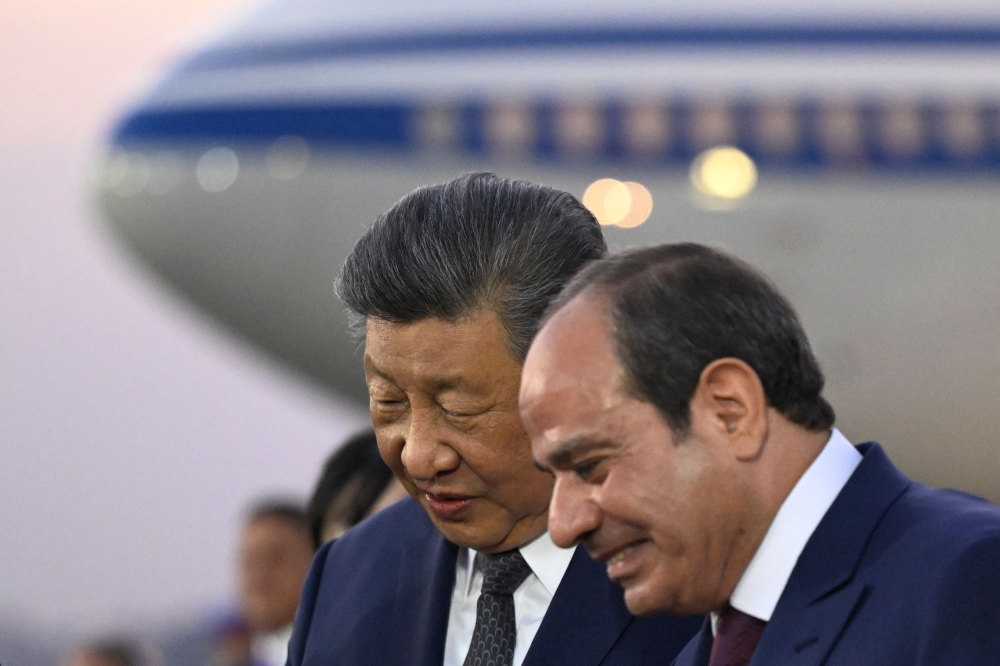
China’s President Xi Jinping has arrived in Cairo for his first visit to Egypt in a decade, meeting President Abdel Fattah al-Sisi at a moment when tensions across the Middle East are reshaping trade, diplomacy and regional alliances.
Xi was welcomed at Cairo’s Ittihadiya Palace with a 21-gun salute, marking the beginning of talks expected to focus on the ongoing US-Iran conflict, its wider economic consequences and the growing importance of maritime trade security.
But beyond the immediate regional crisis, the visit carries a much broader message: China wants to deepen its economic and strategic presence in Egypt, while Cairo is demonstrating that it intends to maintain strong relationships with both Beijing and Washington.
A major economic partnership takes centre stage
China and Egypt, both members of BRICS, are expected to sign several economic agreements during Xi’s visit, covering areas such as artificial intelligence, transportation and manufacturing.
Egypt estimates that Chinese investment in the country has reached around US$10 billion, with Chinese companies playing an increasingly visible role in major infrastructure and development projects.
One of the most significant areas of cooperation is the Suez Canal Economic Zone. Its strategic location makes Egypt particularly important to international trade, and the current instability in the region has only increased attention on the security of shipping routes.
China’s involvement in Egypt’s infrastructure ambitions is also highly visible. Chinese investment has contributed to President Sisi’s large-scale development projects, including the New Administrative Capital located roughly 50 kilometres east of Cairo.
For Beijing, stronger economic ties with Egypt offer access to one of the Arab world’s largest economies and a strategically important gateway connecting Africa, Asia and Europe.
For Cairo, Chinese investment provides another major source of capital and economic cooperation at a time when global geopolitical relationships are becoming increasingly complicated.
China’s growing trade influence
Trade is another important part of the relationship.
Chinese customs data shows that China recorded a trade surplus of around US$12 billion with Egypt during the first seven months of 2026, highlighting the scale of commercial ties between the two countries.
Walking through Cairo during Xi’s visit, the relationship is difficult to miss. Chinese and Egyptian flags have been displayed along major roads, while billboards featuring Xi and Sisi have appeared throughout the capital.
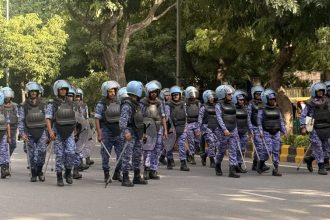
Some streets carry messages celebrating generations of friendship between the two countries, while residents have been advised to expect significant traffic disruption as Xi travels across the city.
His itinerary is also expected to include a visit to the Grand Egyptian Museum, located near the famous Giza Pyramids.
Sisi highlights Egypt’s independent foreign policy
While economics will be high on the agenda, the political message behind the visit may be just as important.
Egypt has long maintained close relations with Washington. It is one of the largest recipients of US military assistance and has historically played an important role in Middle East diplomacy.
At the same time, Cairo has steadily expanded its relationship with Beijing.
Sisi emphasized that balancing these relationships remains central to Egypt’s foreign policy. In an opinion article published in Egyptian media before Xi’s arrival, he highlighted what he described as Egypt’s “independent foreign policy” and positioned Egypt and China as partners in strengthening the role of the Global South.
The timing is significant.
The United States has intensified economic pressure on Iran, while China remains a major purchaser of Iranian oil and has said it will protect its interests.
Washington’s sanctions have also begun creating complications for financial institutions connected to Iran. Last week, the US Treasury announced sanctions targeting the Emirati branch of Egypt’s Banque Misr over alleged support for Iran.
For Egypt, these developments underline the delicate diplomatic position it occupies between competing global powers.
A relationship extending beyond trade
The China-Egypt relationship is no longer limited to infrastructure and commercial exchange.
Military cooperation has also been expanding.
In August, Egypt hosted major joint air combat exercises with China, including the participation of China’s J-16 fighter aircraft. The exercises highlighted the growing defence relationship between the two countries and added another dimension to their strategic partnership.
Egypt’s position as one of the world’s major arms buyers under Sisi also makes its defence relationships closely watched by both Beijing and Washington.
For China, closer relations with Egypt could strengthen its position across the Middle East and North Africa while supporting its wider economic ambitions.
For Egypt, maintaining partnerships with multiple major powers gives Cairo greater room to manoeuvre at a time when the global order is becoming more divided.
Why Xi’s Egypt visit matters
Xi Jinping’s return to Cairo after a decade is more than a diplomatic visit.
It reflects how quickly China’s role in the Middle East has expanded and how countries such as Egypt are seeking to diversify their international partnerships.
The Suez Canal, Chinese investment, manufacturing, artificial intelligence, infrastructure, trade and military cooperation all connect to a much larger strategic picture.
As tensions involving the United States and Iran threaten to affect global shipping and energy markets, Egypt’s geographic importance is becoming even more pronounced.
For Beijing, building a deeper relationship with Cairo strengthens its economic and strategic footprint in a region that remains critical to global trade.
For Sisi, the visit offers an opportunity to attract investment while reinforcing the message that Egypt wants to make its own strategic choices.
The flags across Cairo may be temporary, but the relationship they represent appears to be becoming increasingly long-term.
The bigger question now is how far China-Egypt cooperation will go as the Middle East faces another period of uncertainty and the world moves toward an increasingly multipolar global economy.
Source: AFP