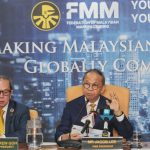
Malaysian manufacturers are heading into Budget 2027 with a clear message to the government: make it easier and more affordable for businesses to grow, invest in technology and compete in an increasingly challenging global market.
The Federation of Malaysian Manufacturers (FMM) has submitted a wide-ranging list of proposals, with lower taxes for small and medium enterprises, major investments in smart manufacturing and stronger support for industrial research and development among its key priorities.
At the top of the wish list is a proposed tiered corporate income tax structure for qualifying SMEs.
Under the proposal, SMEs would pay a 15 per cent tax rate on the first RM1 million of chargeable income, 17 per cent on the next RM1 million and the existing 24 per cent rate on income above that threshold.
FMM believes such a structure could give smaller businesses more room to reinvest in their operations, employees, technology and future expansion.
RM1.5 billion push for smart manufacturing
Technology is another major focus of the manufacturers’ Budget 2027 proposals.
FMM has called for a RM1.5 billion Smart Manufacturing Support Package covering the period from 2027 to 2030.
The proposed package would be divided into three key areas:
RM500 million for automation
RM750 million for manufacturing digitalisation
RM250 million for artificial intelligence adoption
FMM president Jacob Lee said the funding would help manufacturers accelerate the shift towards smarter and more productive factories.
Beyond direct funding, FMM is also calling for enhanced automation allowances, low-interest financing between 2 per cent and 4 per cent, and fully subsidised on-site assessments to help companies determine how they can transform their factories.
For many manufacturers, the challenge is no longer whether technology matters. The bigger question is whether businesses can afford to adopt it quickly enough.
Manufacturers seek RM1 billion for research and innovation
FMM is also proposing a RM1 billion Manufacturing Research and Innovation Endowment Fund.
The proposed fund would be jointly financed by the government and private sector, with each contributing half of the amount.
According to Lee, the fund should be supported by more accessible research and development incentives, allowing manufacturers to pursue new technologies, products and processes without carrying the entire financial burden themselves.
The broader objective is to encourage Malaysian manufacturers to move beyond simply adopting existing technologies and instead develop their own capabilities in innovation and research.
Turning foreign-worker levies into investments
Foreign labour also features prominently in FMM’s proposals.
Rather than treating foreign-worker levy collections simply as government revenue, the federation wants a larger share of the funds redirected towards developing Malaysian talent and accelerating automation.
FMM proposed that 60 per cent of the collections be channelled towards skills development, supported by RM100 million in seed funding.
The remaining 40 per cent would be directed towards automation, with RM500 million in seed funding proposed.
The idea is straightforward: use the money collected from the industry to help manufacturers become more productive and gradually reduce their dependence on low-skilled foreign workers.
For manufacturers facing labour shortages and rising operating costs, the combination of better-trained local workers and greater automation could become increasingly important.
Supply chain resilience gets a place on the agenda
FMM has also proposed a RM100 million National Supply Chain Resilience Fund.
The proposed fund would help manufacturers secure critical inputs, find alternative suppliers and diversify their sourcing networks.
The proposal comes as businesses continue to face uncertainty from global supply disruptions, geopolitical tensions, changing trade conditions and rising costs.
For manufacturers, having a product ready is only half the battle. If essential raw materials or components cannot be secured reliably, production can still come to a standstill.
Strengthening supply chains could therefore help Malaysian companies become more resilient when global disruptions occur.
What manufacturers say they need most
FMM’s latest Business Conditions Survey provides further insight into what companies want from Budget 2027.
The survey found that manufacturers are primarily looking for measures that reduce the direct cost of doing business while strengthening their competitiveness.
The three most strongly supported proposals were:
Direct tax or duty relief for essential raw materials, machinery and production inputs, supported by 46 per cent of respondents.
Lower corporate income tax, particularly for SMEs and mid-tier companies, supported by 43 per cent.
Relief on electricity, natural gas and other energy costs, supported by 30 per cent.
Together, the findings paint a picture of an industry trying to balance immediate cost pressures with the need to invest for the future.
A bigger question for Malaysia’s manufacturing sector
FMM’s Budget 2027 proposals are ultimately about more than tax rates or government allocations.
They reflect a broader concern facing manufacturers: how can Malaysian companies remain competitive while labour costs, energy expenses, technology requirements and global uncertainty continue to evolve?
Lower taxes could provide businesses with breathing room. Funding for automation and AI could help them become more productive. Greater support for research could encourage home-grown innovation, while supply-chain funding could make companies more resilient.
But the real test will come from implementation.
For manufacturers, Budget 2027 could be an opportunity to turn pressure into progress. The businesses that can invest in people, technology and resilience today may be the ones best positioned to compete tomorrow.
And behind all the billions and percentages is a very human reality: manufacturers are not simply asking for help to survive. They are asking for the room, resources and confidence to build stronger Malaysian businesses for the future.